Caribbean Sustainable Architecture: Design and Efficiency in Punta Cana
The sustainable Caribbean architecture sounds like a catalogue phrase. But it isn’t. It’s a concrete response to what’s happening here. The region received 11.6 million visitors last year. That’s no ordinary figure. It’s pressure on the ecosystem, on water, on everything. Building differently is no longer optional. At Salado Golf & Beach, in White Sands, Bavaro, Punta Cana, they’re doing it. New apartments, beachfront, that blend bioclimatic design with local materials and luxury amenities. It sounds contradictory. It isn’t.
What is this sustainable Caribbean architecture all about?
Look, it’s simpler than it seems. It’s about not fighting the tropical climate. Stop blasting the air conditioning and start thinking: what if the wind cools things down on its own? What if the sun can be kept out with a well-placed eave? In the Dominican Republic the principles are clear: solar orientation, cross ventilation, materials that withstand the salt spray without rotting, and a landscape that isn’t just decoration but part of the design. It’s not fighting the sun and the breeze. It’s using them.
Bioclimatic design principles
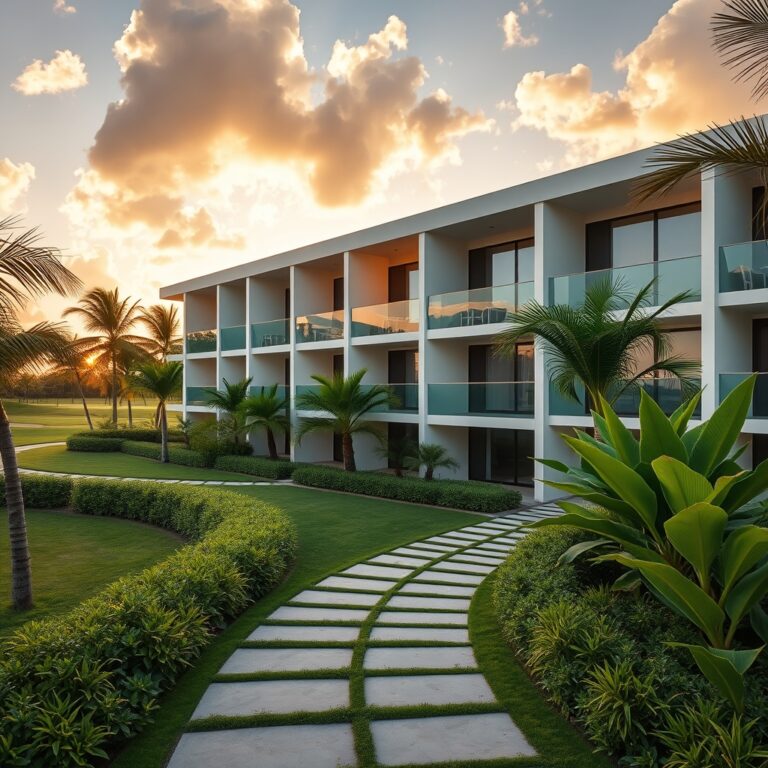
- Strategic orientation: The main façades face north or south. That way the sun doesn’t hit directly. Less air conditioning. Simple.
- Natural ventilation: Large windows, open terraces. The Atlantic trade winds do the work.
- Solar protection: Eaves, pergolas, native plants. They filter the light without taking away your sea view.
- Thermal insulation: Green roofs or reflective materials. The heat can’t sneak in so easily.
Local materials and energy efficiency
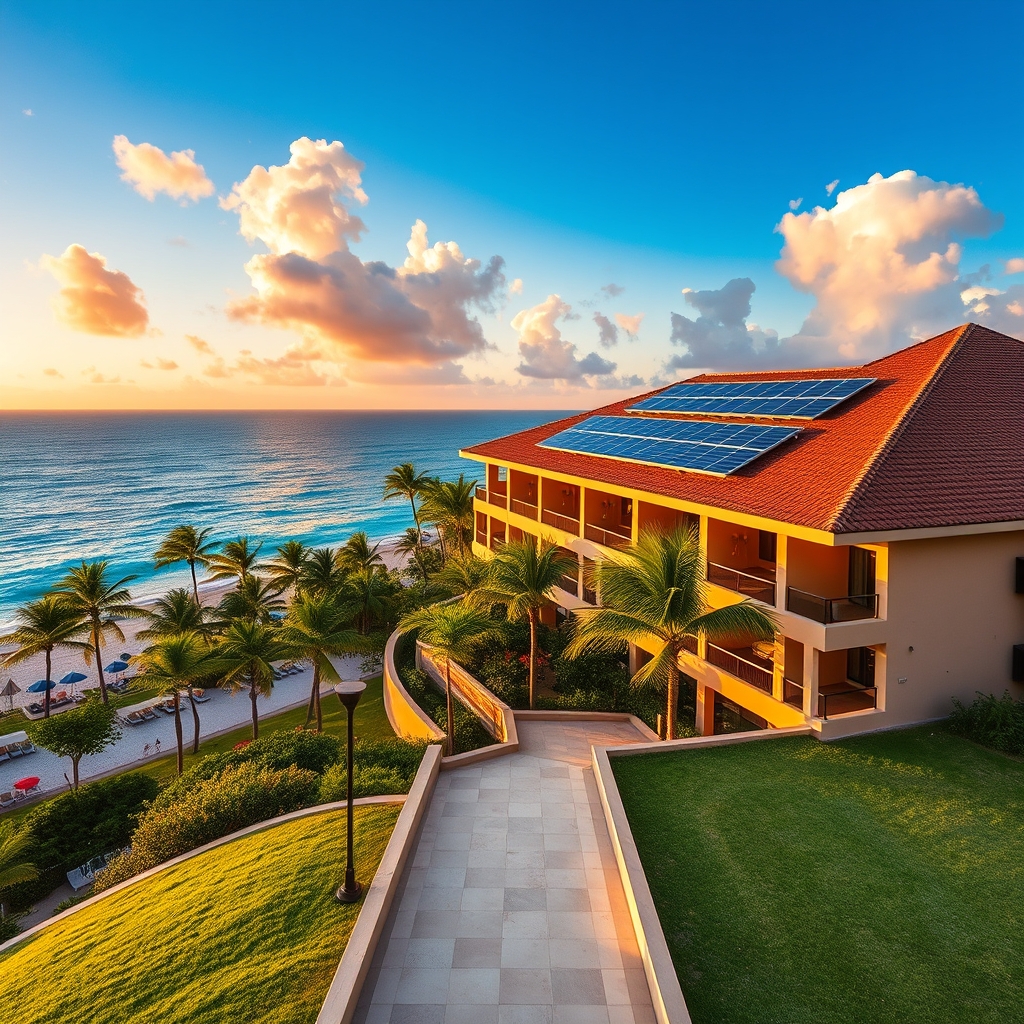
Using limestone from here, treated local timber, concrete that withstands humidity and salt spray… that’s not just eco posturing. The transport carbon footprint shrinks. And the building lasts longer. Full stop. Energy efficiency comes with LED lighting, solar panels for hot water, appliances that don’t over-consume. In projects like Salado, energy consumption drops by up to 30% compared with a standard Caribbean home. Not bad at all.
And is it profitable?
Investing in Caribbean sustainable architecture isn’t charity. It’s business. The sector data says it all: sustainable properties in Punta Cana have occupancy rates above 85%. Returns of 8 to 12% per year. Why does this happen?
- They attract a different kind of tourist: The high-end one, the one who asks what the hotel is made of. On Airbnb, that shows.
- Lower operating costs: Less electricity, less water. Community fees go down. The margin goes up.
- Capital appreciation: Environmental regulations get stricter every year. Properties that already comply appreciate on their own.
- Climate resilience: Materials and techniques that withstand hurricanes. No small detail around here.
Salado Golf & Beach: luxury that doesn’t fight the surroundings
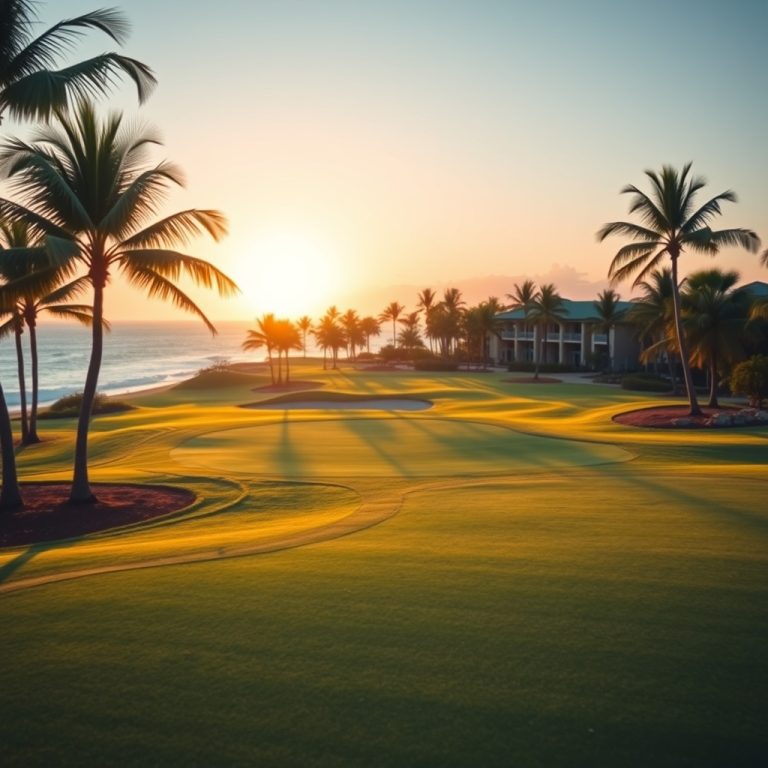
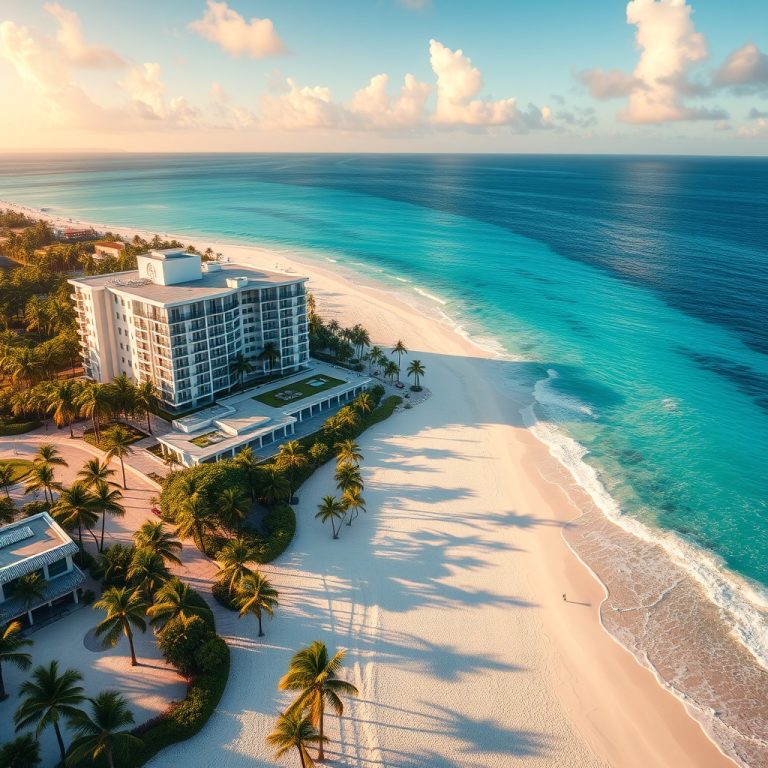
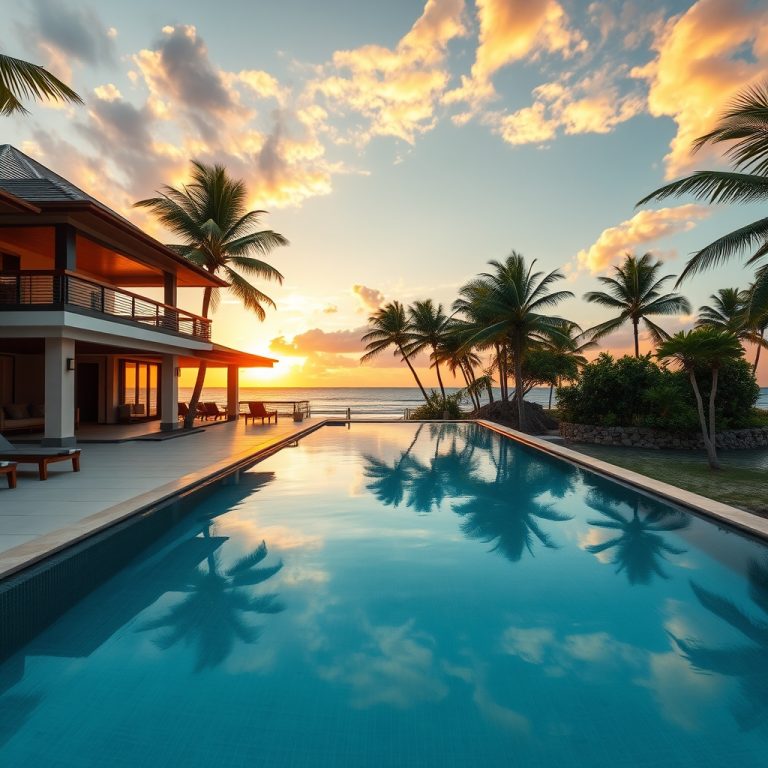
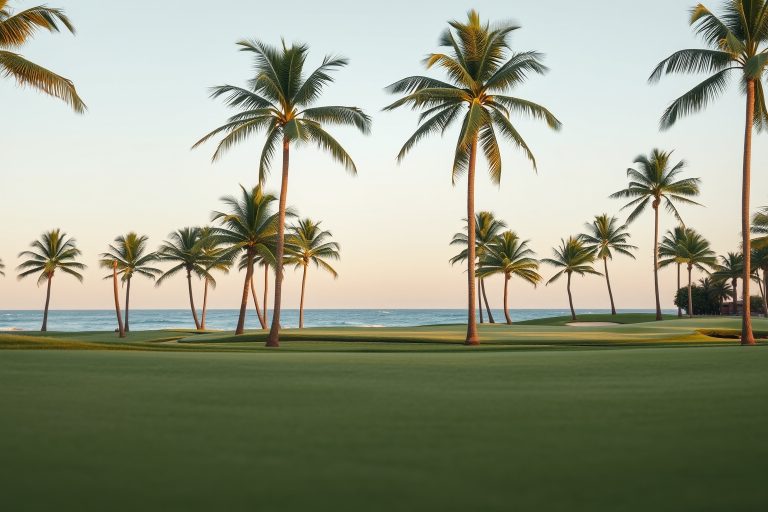
This residential development is a concrete case. Seafront, in White Sands, Bávaro. It has an 18-hole golf course, spa, infinity pools, direct beach access. All the luxury you’d expect. But the design wasn’t done just for the photos. Each new-build apartment is designed to let in natural light, for the breeze to flow through, and for the ocean views to take centre stage. The gardens use native plants that need little water. That’s no coincidence.
A location and amenities that hook you in
The idea here is the slow living the residential community promises. Calm, nature, comfort. Club house, gym, lounge areas, concierge services to help you with holiday rentals if you wish. And Punta Cana International Airport is just a few minutes away. The most connected in the Caribbean. No small thing.
Tip for investors: Before buying, ask about the energy efficiency certifications (LEED, EDGE, something like that). At Salado Golf & Beach, the Residencial Group team will explain the technical features to you. It never hurts to ask.
Five things to check before buying a sustainable property in the Caribbean
- Solar orientation: Ask for the blueprints. Or better yet, visit the site. Main windows facing north or south. If not, the air conditioning will eat into your profitability.
- Facade materials: Salt air is a silent enemy. Stone, good quality ceramics. Untreated wood, not a chance.
- The wastewater system: Serious projects have their own treatment plants. The water is reused for irrigation. It is not a luxury, it is common sense.
- Natural ventilation: Open terraces, sliding picture windows. That is true bioclimatic design.
- Waste management: Is there recycling? Community composting? Ask. Not everyone does it.
Frequently asked question: Is Caribbean sustainable architecture more expensive than conventional architecture?
The initial investment can be 5-10% higher. But the savings in energy, water and maintenance recoup it in just a few years. And the demand for this type of property pushes up the resale value. It is not an expense, it is an investment.
Investing with conscience and style
Caribbean sustainable architecture is not a trend. It is a necessity. Tourism is growing unchecked and the ecosystem cannot take any more. Choosing an apartment at Salado Golf & Beach is not just buying a property. It is betting on a design that cares for the sea, reduces costs and offers authentic luxury. With returns of 8 to 12% per year and the peace of mind that it is built to last, the decision becomes easier. Slow living and efficiency can coexist by the sea. If you are interested, Residencial Group can show you the available units in Bávaro. It is worth seeing.