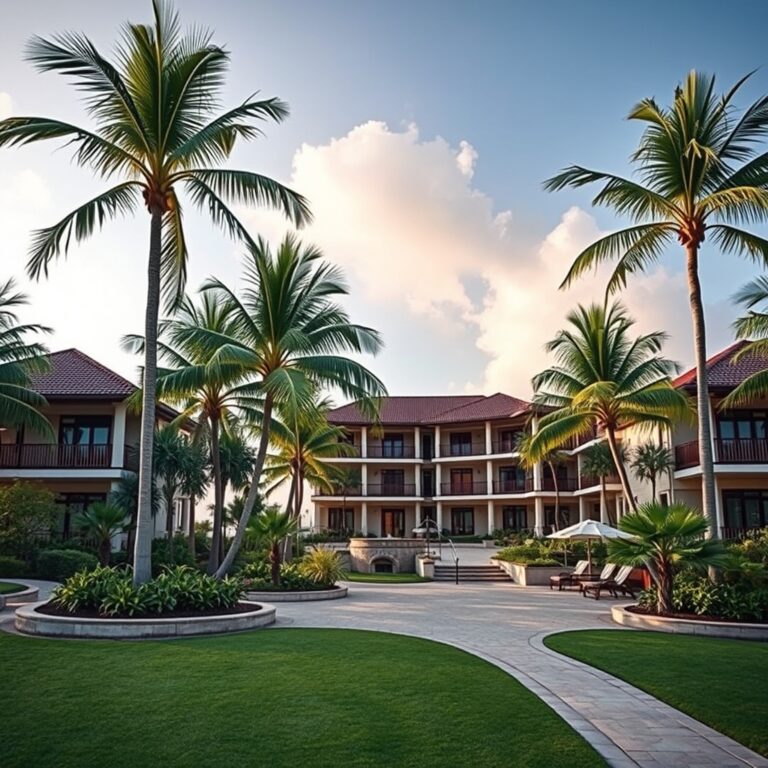

Legal steps for buying property in the Dominican Republic: the 2026 foreign buyer’s guide
Complete Guide to Legal Procedures for Buying Property in the Dominican Republic as a Foreigner (2026)
Buying property in the Dominican Republic is one of the most attractive investment decisions in the Caribbean. White-sand beaches, a tropical climate, legal stability and competitive prices make destinations such as Punta Cana, Sosúa or Las Terrenas ideal options for Caribbean real-estate investment. However, to buy property in the Dominican Republic as a foreigner, you need to be familiar with the legal procedures in the Dominican Republic for foreigners that guarantee a safe transaction with no surprises. In this guide, updated for 2026, we break down every step, the required documents, the closing costs and the applicable taxes, with concrete examples in USD.
If you are considering buying a house in Punta Cana or any other property in the country, this information will help you understand the process, avoid common mistakes and protect your investment.
Legal requirements for foreigners wishing to buy in the Dominican Republic
Territorial restrictions: permitted zones
Contrary to what many believe, foreigners can indeed buy property in the Dominican Republic without restrictions across most of the territory. The only legal limitation applies to border areas (up to 20 km from the border with Haiti), coastal zones declared of tourist or military interest, and protected areas. In practice, destinations such as Punta Cana, Bávaro, Juan Dolio, Cabarete and Santo Domingo are completely open to purchases by non-residents.
You do not need to be a Dominican citizen or a permanent resident. You can buy a house in Punta Cana as a tourist, provided you hold a valid passport and a Dominican tax identification number (RNC or foreigner’s ID card).
Tax identification and NIE
To carry out any property transaction, you will need a Dominican tax identification number. If you are a foreigner without residency, you can obtain the RNC (National Taxpayer Registry) easily through a lawyer or directly at the Directorate General of Internal Taxes (DGII). It is also possible to use your passport number as identification, but the RNC is mandatory for paying taxes and registering the title.
Documents needed to buy property in the Dominican Republic
For individuals (individual buyer)
- Valid passport (original and copy).
- RNC or Dominican identity card (if applicable).
- Proof of income or financial solvency (bank statement, letter of funds).
- Sworn declaration of source of funds (for amounts over USD 50,000 under anti-money laundering regulations).
- Letter of intent to purchase (prepared by the lawyer).
For legal entities (offshore companies or trusts)
- Company incorporation documents (deed of incorporation, articles of association).
- Notarised power of attorney from the legal representative.
- Up-to-date commercial registry.
- Identification of the ultimate beneficial owner (an increasingly strict requirement).
The final Dominican property title will be issued in the buyer’s name, whether an individual or a legal entity, following registration at the Registry of Titles.
Step-by-step process for buying property in the Dominican Republic
Step 1: Offer and deposit
The process begins with a formal purchase offer that includes the price, payment method, closing date and conditions. It is customary to hand over a deposit of 5% to 10% of the property’s value (this deposit is deducted from the final price). The deposit is given to the seller or placed into an escrow account managed by a neutral lawyer.
Step 2: Legal due diligence
Your lawyer must verify that the property is free of encumbrances, liens, municipal tax debts, easements or litigation. A title certificate and a certificate of no outstanding debts are requested from the town hall and the DGII. This step is critical to avoid surprises in the legal procedures Dominican Republic foreigners.
Step 3: Signing of the purchase option contract
Once the legal situation has been verified, a private purchase option contract is signed. This document establishes the final price, the closing date (usually 30 to 60 days later) and the penalties for breach. A second deposit is usually paid (20% to 30% accumulated).
Step 4: Signing of the deed of sale before a notary
The main deed is executed before a notary Dominican Republic, who certifies the transaction publicly. Both parties sign the public deed of sale. At that moment the remaining balance is paid, taxes are settled and the keys are handed over. The deed must contain the description of the property, price, parties and tax declarations.
Step 5: Registration of the title at the Registry of Titles
The notarial deed is recorded at the Registry of Titles corresponding to the property’s jurisdiction. This official registration grants the definitive property title Dominican Republic in the buyer’s name. The registration process can take 2 to 4 months. You will receive a digital or physical title certificate, depending on the system.
Closing costs and taxes when buying property in the Dominican Republic
Knowing the additional costs beyond the purchase price is essential for calculating the total budget. Here we detail the main items with concrete figures.
Property Transfer Tax (ITBI)
This is the main tax paid by the buyer. It amounts to 3% of the higher value between the purchase price and the cadastral value of the property. For example, if you buy a property for USD 200,000 and the cadastral value is USD 180,000, you will pay 3% on USD 200,000 = USD 6,000.
Solicitor’s fees
It is essential to hire a local solicitor specialising in real estate law. Their fees typically range from 1% to 2% of the property’s value. For a USD 200,000 property, expect to pay between USD 2,000 and USD 4,000. This cost includes due diligence, contract drafting and registration processing.
Notary fees
The notary charges a fee regulated by the College of Notaries, which is around 0.5% to 1% of the transaction value. In the USD 200,000 example, this would be USD 1,000 to USD 2,000.
Registration costs
Registering the title with the relevant office costs approximately 0.5% to 1% of the property’s value, plus fixed administrative fees (around USD 200). Estimated total: USD 1,000 to USD 2,000.
Other costs
- Title certificates and valuation: USD 200 – USD 500.
- Translations and legalisations (if applicable): USD 100 – USD 400.
- Municipal transfer tax (varies by municipality): approx. USD 300 – USD 800.
Summary table of costs for a USD 200,000 property
| Item | Percentage / Amount | Estimated amount (USD) |
|---|---|---|
| ITBI (3%) | 3% of purchase price | 6,000 |
| Solicitor’s fees | 1.5% (average) | 3,000 |
| Notary fees | 0.75% | 1,500 |
| Title registration | 0.75% + fees | 1,700 |
| Certificates and valuation | Fixed | 400 |
| Municipal tax approx. | Variable | 500 |
| Total closing costs | ~6.8% | 13,100 |
These costs may vary depending on negotiation (sometimes the seller shares some of the expenses) and the complexity of the case.
Trust vs direct purchase: which should you choose?
An important decision when you buy property in the Dominican Republic is whether to do so directly or through a real estate trust (fideicomiso). Both options have advantages depending on the investor’s profile.
Direct purchase
This is the most common and straightforward route. The title deed is registered directly in the buyer’s name (individual or legal entity). Advantages: full control over the property, immediate enjoyment, lower structuring costs. The disadvantage is that if the buyer passes away, the property passes to their heirs under Dominican law (succession), which can involve lengthy processes if there is no will.
Real estate trust (fideicomiso)
A trust is a contract in which the buyer (trustor) transfers the property to a trustee (usually a bank or authorised entity) that administers the asset for a beneficiary (the buyer themselves or a third party). It is widely used for tourism development projects and by investors seeking estate planning. Advantages: it avoids probate, allows the property to be divided into participation certificates, facilitates a future sale and can offer tax benefits. Disadvantages: annual administrative costs (approx. USD 500 – 1,500) and less flexibility for immediate decisions.
For most foreigners who wish to buy a house in Punta Cana for holiday use or rental, a direct purchase is sufficient. For portfolio investors or complex inheritance situations, the trust may be more convenient.
Practical tips for the foreign investor
Title and lien verification
Do not sign anything without due diligence carried out by a registered lawyer. Request a