Where to invest in Caribbean beach resorts
The Caribbean remains one of the most attractive property markets for those seeking returns through holiday rentals. But not all destinations offer the same guarantees: choosing wisely where to invest can make the difference between a solid deal and a nasty surprise. In this article we compare the Caribbean’s leading destinations and explain why Punta Cana and Bávaro, in the Dominican Republic, top the list of investment options.
What to look at before choosing a destination
Before comparing specific places, it is worth being clear about the criteria you should analyse in any Caribbean market:
- Tourism growth: a destination receiving ever more visitors sustains short-term rental demand. If arrivals stagnate, profitability suffers.
- Air connectivity: the more direct flights the local airport receives from Europe and the Americas, the easier it is to fill the booking calendar.
- Legal security for foreigners: in some Caribbean countries foreigners cannot buy freely or need corporate structures. In the Dominican Republic, by contrast, foreigners and nationals have the same property rights.
- Tax incentives: programmes such as the Dominican CONFOTUR Law exempt buyers from paying the Property Transfer Tax (3%) and IPI (property tax) for 15 years in approved projects.
- Price per square metre: the entry point matters. The more accessible the initial price, the easier it is to diversify or absorb risk.
- Holiday rental demand: checking the area’s average occupancy and nightly rates is just as important as the purchase price.
Punta Cana and Bávaro: the main option
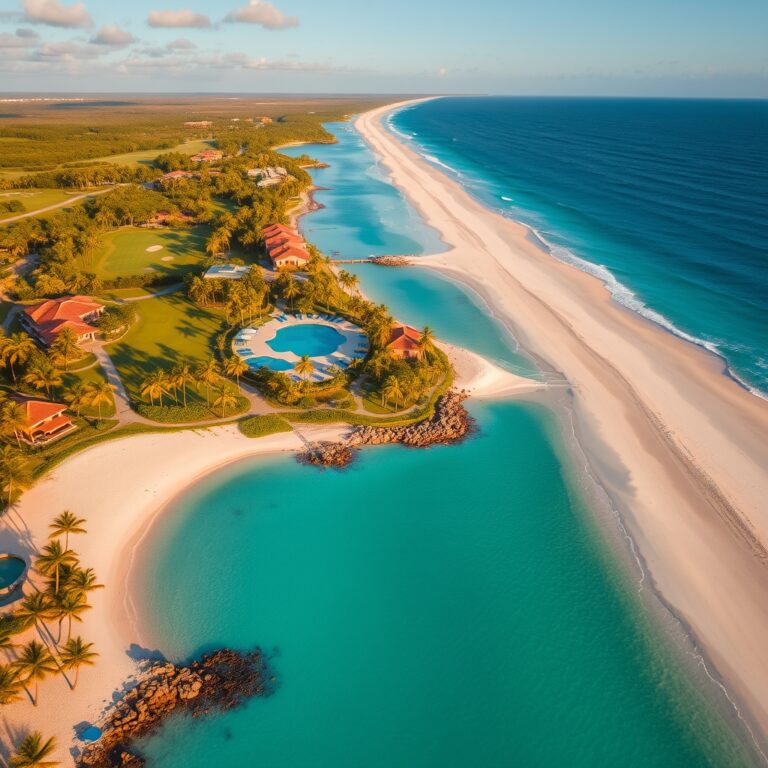
Punta Cana is the main tourist hub of the Dominican Republic and one of the Caribbean destinations with the highest volume of visitors in the area. Punta Cana International Airport (PUJ) receives direct flights from Madrid, Barcelona, several cities in the United States, Canada and South America, which guarantees constant demand throughout the year, without depending on a single season.
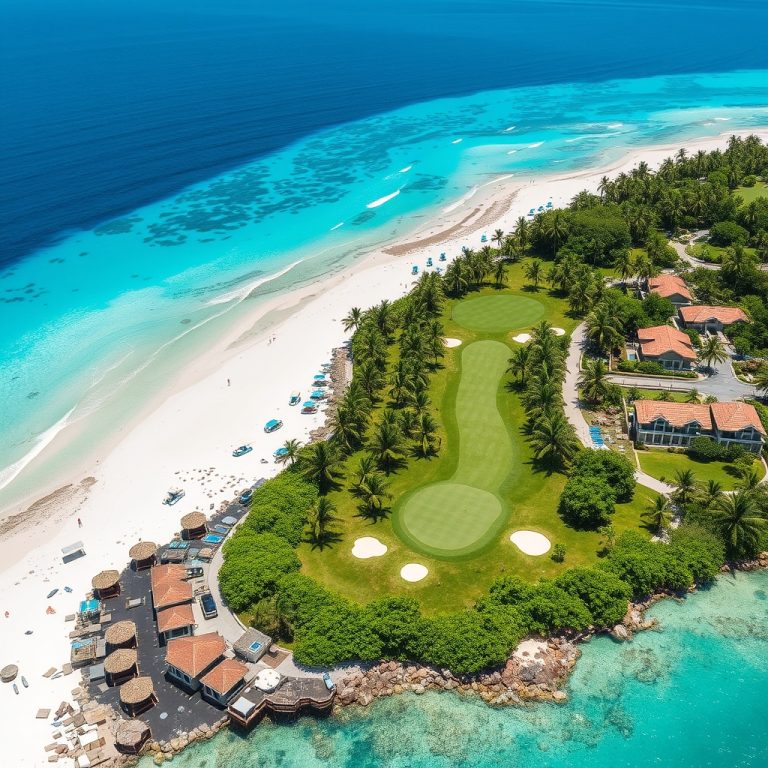
The Bávaro area also concentrates a large part of the hotel and services offering: white-sand beaches, golf courses, shopping centres, private hospitals and restaurants. This consolidated ecosystem is exactly what the tourist who rents an apartment instead of booking a hotel is looking for.
In terms of prices, Punta Cana still offers reasonable entry points compared with other Caribbean destinations of a similar profile. A good example is the off-plan apartment development Salado Golf & Beach, in White Sands, Bávaro: apartments from 170,000 USD, with a staggered payment plan (reservation from 3,000 USD and 30% at signing, 35% during construction and 35% against handover) and the CONFOTUR tax benefit. The estimated rental yield for holiday rentals stands at between 8% and 12% per year, always depending on the conditions of each season and management.
Santo Domingo and La Romana
Santo Domingo, the capital, is a more urban and business-oriented market. It offers long-term rental demand from professionals and students, with contained entry prices in some districts. However, its holiday rental potential is lower: it is not a beach destination and its tourist appeal is concentrated in the Colonial Zone, a more limited area.
La Romana, for its part, is a consolidated tourist destination, with access to Casa de Campo and the proximity to Isla Saona as its main draws. Its prices are somewhat higher than in Bávaro and the volume of tourism is lower, which usually translates into more seasonal holiday rental demand and fewer off-plan purchase options with tax incentives.
Other Caribbean destinations, briefly
If we widen the map, there are well-known alternatives with their own profiles:
- Playa del Carmen and Riviera Maya (Mexico): a mature market with high demand, but higher entry prices and greater competition.
- Cartagena de Indias (Colombia): a historic city with strong tourism, although legal security and regulatory changes demand greater diligence.
- Panama and Costa Rica: stable markets with a good investment climate, although their strictly Caribbean offerings are more limited and prices per square metre tend to be higher.
- Dominican Republic (north, Puerto Plata): a recovering destination with low prices, but with less international connectivity than Punta Cana.
Why Punta Cana leads
Punta Cana wins the comparison because of a combination of factors, not just one:
- Leading connectivity in the Caribbean: one of the airports with the highest international traffic in the region, with direct flights from Europe and the Americas.
- Demand all year round: tourism arrives from both hemispheres, which softens seasonality.
- Favourable legal framework: foreigners buy with the same rights as nationals, with no restrictions in tourist zones.
- CONFOTUR incentives: real tax savings for 15 years on qualifying projects.
- Competitive entry prices: with projects such as Salado Golf & Beach from 170,000 USD, the barrier to entry is accessible compared with other Caribbean areas.
Practical tips before investing
- Off-plan purchase with payment plan: allows you to stagger the investment. In Salado I, under construction with estimated delivery in April 2027, the scheme is 30% at signing, 35% during construction and 35% on delivery, with reservations from 3,000 USD.
- Verify that the project has CONFOTUR: not all developments have it, and the tax savings are significant.
- Assess the location with a tourist’s mindset: proximity to the beach, services and points of interest determine occupancy.
- Treat profitability as an estimate: a range of 8-12% annually is an estimated calculation; validate it with real occupancy data for the area.
- Work with local advice: a Dominican lawyer to review titles and the contract is essential.
Salado Golf & Beach, in White Sands, Bávaro, brings together the elements we look for: off-plan purchase, staggered payments, CONFOTUR tax incentives and a location in the country’s fastest-growing tourist area. It is a serious option to consider if your goal is to invest in the Caribbean with a contained entry point.
Frequently asked questions
Can a foreigner buy property in the Dominican Republic?
Yes. Dominican legislation allows foreigners to buy properties with the same rights as nationals, including tourist areas such as Punta Cana and Bávaro, without the need to set up a local company.
What is the CONFOTUR Law and what advantage does it offer?
It is a Dominican programme that grants tax incentives to qualified tourist projects, including exemption from the Real Estate Transfer Tax (3%) and from property tax (IPI) for 15 years from the project’s qualification.
Is buying off-plan in Bávaro profitable?
Buying off-plan allows you to pay in phases and access launch prices. In the case of Salado Golf & Beach, the estimated rental profitability