
Buying in the Dominican Republic: Legal security
The boom in Caribbean real estate investment: Is buying in the Dominican Republic safe?
The Caribbean property market is enjoying a sweet moment, and the Dominican Republic has taken the lead in the region. A record 11.6 million visitors is expected for 2025. With that flow of people, demand for quality accommodation and second homes has soared. For the European investor, used to rigid regulatory frameworks, the question arises: does buying in the Dominican Republic offer the same guarantees as in their home country? The answer is yes. Provided the right protocols are followed and the correct advice is obtained.
Forget the image of a “lawless land” that some fear. The country has a robust property registration system, based on the Torrens system. It is the same one used by common law nations such as Australia or Canada, and very similar to American title insurance. This provides near-absolute legal certainty over land ownership. A critical factor when acquiring high-value assets such as those offered by Salado Golf & Beach.
The Title Registry system: The cornerstone of investment
Legal certainty in the Dominican Republic rests on the Land Court. Unlike other systems where registers are merely declarative, here the register is constitutive. Whoever appears on the title certificate is the indisputable owner of the plot. If records are not titled or show irregularities, they cannot legally be transferred until they are resolved.
For the European buyer, this translates into peace of mind. Before releasing any money, an exhaustive title search is carried out. This process verifies that the seller is the real owner. It also checks that there are no liens, mortgages or embargoes on the parcel. In new property developments in tourist areas, such as Bávaro or Punta Cana, one vital thing must be confirmed: that the developer holds the mother title, duly segregated for each apartment or villa.
Difference between Certificate of Title and Mortgage Rights
It is vital to understand that in the Dominican Republic there are two main statuses for a property:
- Certificate of Title (Título de Propiedad): This is the highest guarantee. The property is perfectly registered and measured. It is the indispensable requirement for a secure investment.
- Mortgage Rights: These are properties in the process of being titled. Although they are legal and transferable, they do not offer the same immediate security as the final title. The recommendation for high-end investors is clear: go for properties with a definitive Certificate of Title.
Practical Tip: Never sign a promise of sale without your lawyer requesting the current Certificate of Title from the corresponding Land Tribunal. This document is valid for 60 days and is your only proof of public faith.
The purchase process step by step for the foreign investor
Buying a second residence in paradise does not require being a legal resident. Foreigners have exactly the same property rights as Dominican citizens. The process is transparent and swift, especially when managed through professionals such as Residencial Group. Here is the path to ownership of your asset:
- Offer and Acceptance: A reservation contract or promise of sale is drafted. This is where the conditions, price and closing period are set. It is the moment to negotiate the price of new-build units in available phases.
- Due Diligence: The real-estate lawyer reviews the legal history of the property. This period usually lasts between 15 and 30 days.
- Definitive Sale Contract: Before a Dominican notary, the deed of purchase and sale is signed. At this moment, the buyer makes the full payment of the outstanding balance.
- Transfer and Registration: The deed is submitted to the Land Court. The transfer taxes are paid (currently around 3% of the property’s value) and a new Certificate of Title is issued in the buyer’s name.
Salado Golf & Beach: Transparency and quality in Bávaro
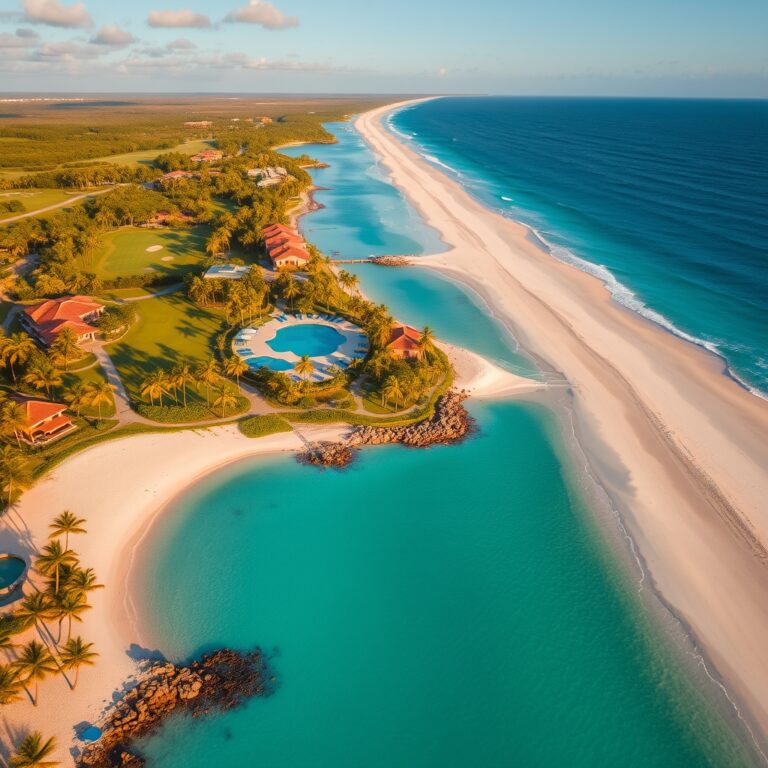
When considering investment projects in a tourist area, the solidity of the developer is just as important as the legal framework. Salado Golf & Beach is a unique opportunity in White Sands, Bávaro. Not only for its beachfront location and its designer golf course, but for its structural and legal integrity.
This new-build apartment residential offers European investors something key: the peace of mind of buying in a development that complies with all current construction permits and the region’s seismological regulations. By investing here, you are not only purchasing a physical property with luxury finishes and access to a spa and premium services. You acquire an asset free of legal encumbrances. The marketing in Spain managed by Residencial Group ensures that all documentation prior to the trip is translated, validated and explained with complete clarity. Language and bureaucratic barriers are thus eliminated.
The estimated profitability of 8-12% per year in this area is underpinned by a legal tourist operation. Your apartment can be part of fully regulated holiday rental programmes, maximising your income without risks of closure or administrative fines.
Taxation and protections for European capital
Another aspect that generates confidence when buying in the Dominican Republic is the attractive tax regime for foreigners. There is no worldwide income tax for non-residents (only income generated within the country is taxed). The property tax (IPI) is very reasonable compared to European standards.
To protect your investment, it is common to establish a Dominican company to hold the property. This not only facilitates inheritance, avoiding costly and lengthy probate processes abroad, but also adds a layer of privacy and asset protection. The country’s legal framework allows this company to be set up quickly and at low cost. It is a standard practice recommended by lawyers specialised in international law.
Frequently Asked Questions about legal security
Can I lose my property if the government changes the laws?
No. The Constitution of the Dominican Republic guarantees the right to private property. Legislative changes cannot retroactively affect titles that have already been legally issued and registered.
Is it necessary to travel to the country to close the purchase?
It is not strictly necessary. Through a notarised power of attorney, your lawyer can sign the deed on your behalf. However, visiting White Sands and experiencing the slow living of Salado Golf & Beach is highly recommended to connect with your investment.
Conclusion
Legal security when investing in the Caribbean is not a utopia. It is a structured reality in the Dominican Republic. With a land registry system that provides full certainty, equal treatment for the foreign investor and a stable fiscal framework, the country stands out as the perfect destination for diversifying wealth. Landmark projects such as Salado Golf & Beach in Bávaro encapsulate this security, offering not only a luxury beachfront lifestyle, but a tangible asset that is legally safeguarded. With the right advice, buying in the Dominican Republic is a sound, prudent and extraordinarily profitable investment decision.